
The Ordinary was built on radical transparency: clinical ingredients, clear pricing, science-led communication. Its success relies on this positioning, as it operates in a category built on the opposite.
"Medical grade." "Clean beauty." "Fat freezing." Unregulated terms designed to imply authority, rarity, transformation — to command higher prices and drive overconsumption, especially among younger audiences moving at the speed of the algorithm. This is a systemic problem. Consumers are paying more for products framed as luxurious or revolutionary with no science behind them, and the bidding war never stops as long as customers buy into it.
The Ordinary keeps proving the same point: the future of marketing isn't a bigger claim; it's a brand that never breaks from its own values. Purpose isn't the campaign's backdrop; it's the entire strategy.
How do you sell truth in a market addicted to fiction?
51% of UK skincare shoppers say they're more likely to trust a product simply because it's labeled 'luxury.' One in ten US consumers will pay a $75 premium for 'rare ingredient' promises with zero clinical backing. The anti-aging category alone is forecast to hit $80 billion by 2030. Most brands would use that data to sharpen their pitch. The Ordinary used it to strip every claim off the table instead.
The Periodic Fable is that founding position turned into a piece of culture. The industry uses fear and future faking to trigger purchase; everyone sells a shortcut to a result science can't promise.

The brand's oldest idea, finally given a big enough stage.
The Ordinary never says who's lying. It doesn't need to. It just holds the industry's own vocabulary up to the light. Nobody else in the market can say this is unfair. Nobody else can say it's inaccurate, either.
That restraint isn't new, it's where the brand started. In 2025, "The Truth Should Be Ordinary" launched as a free digital archive exposing the industry's best-kept secrets. The initiative breaks down misinformation, putting scientific fact within reach of everyone through white papers and expert explanations on contested subjects like parabens, "natural" skincare, and animal testing. It's a rebellion against deception, proof that science belongs to everyone, not just the few. The brand purpose was not only a marketing claim, but a real stand apart from the industry.

The Periodic Fable: turning a digital platform into a global campaign
Working alongside scientists, The Ordinary identified 49 widely used beauty marketing terms with no scientific or regulatory foundation. Words built to sound authoritative, aspirational, clinical, and meaning nothing. They went into a reimagined periodic table: "Magic," "Medical Grade," "Fat Freezing" in place of hydrogen and helium. Each element links through to the science that disproves it. Not a campaign that expires — an open-source index for accountability, live permanently online as a public education tool.
The format is the argument. Everyone sat through the periodic table in school; it's the single most recognizable symbol of science. Putting the industry's empty language inside that exact structure is where the campaign magic lies in: it doesn't just talk about science, it borrows science's own icon to prove it.
The rollout strategy: reach by design
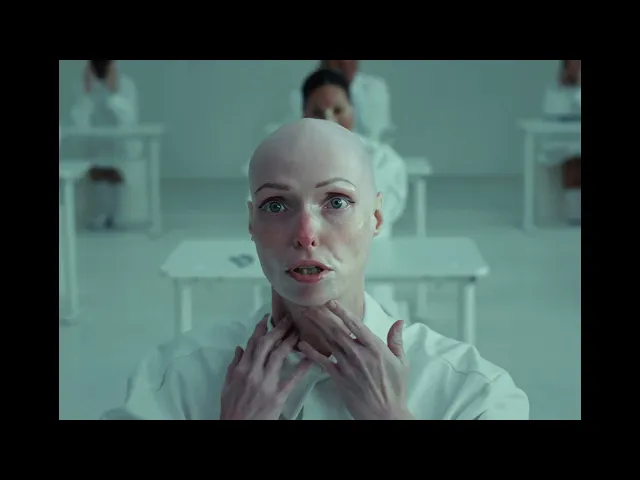
Film — a dystopian 60-second spot where students perform viral skincare rituals like a cult ritual, until one breaks the spell.
Digital — every one of the 49 terms is clickable through to the real science, or the absence of it. This is where the film's provocation turns into proof; the table lives permanently on The Ordinary's own site, not a campaign page that expires.
Social and influencer — activated across the UK, US and Canada. This is what carried the campaign past its paid markets into organic pickup across 24+ countries.
OOH — This takes the table out of the feed and into physical space, turning a traditional channel into a cultural piece.

The proof, not the point
Millions of views on the launch film within 24 hours
80+ pieces of press coverage
4.6x increase in engagement, 5x increase in new followers, 4x increase in impressions
11.8x increase in website traffic
Among US women, a core target: +10.4% purchase intent, +8.5% brand awareness
The success came from the outside too. The campaign picked up 10+ awards, including the Health & Wellness Grand Prix at Cannes Lions. Proof that creativity in service of doing right has real value, and that bold brands still have room to disrupt an entire industry.
Is the future of marketing truth, not tone ?
In a world flooded with AI-generated content, customers will do more checking before they buy, and the brands that survive that scrutiny will be the ones that never separate their message from their purpose.
That's also the part most brands skip: good marketing isn't a single campaign; it's the same message again and again until it becomes recognition, then trust. The message only holds if what you sell matches what you say.

